
Lodi People Directory Coverage
The useful people directories serving Lodi range from live agency lists to bound books in a research room. None covers every resident. Government and school pages list public offices, while ownership and deed indexes list people only when a parcel or recorded event connects them. Archive directories come closest to broad resident listings, but their value depends on the year.
| Listing source | People or names included | Keeper | Availability |
|---|---|---|---|
| City staff directory | Departments, units, public contacts | City of Lodi | Current, free web page |
| Lodi Unified departments | Administrators and department staff | Lodi Unified School District | Current, free web page |
| Grantor/Grantee Index | People named in recorded documents | San Joaquin County Recorder | Online from 1968; older office records |
| Property and tax systems | Parcel and lien-date owner data | County Assessor and Tax Collector | Search by address or parcel key |
| Business and license lists | Members, entities, agents, licensees | Chamber and California agencies | Current online searches |
| City/county directories | Past residents and businesses | Historical Museum and libraries | Museum span: 1852-1980 |
| Yearbooks and Great Registry | Students, staff, historical voters | San Joaquin Historical Museum | Research-room access |
Start with the narrowest fit. A department name points to an agency directory. A street address belongs in property and archive sources. A trade, shop, or winery name is better tested against license and business directories. For an earlier resident, the museum, state library, yearbooks, newspapers, and cemetery references form the strongest chain.
Lodi Government Directory Entries
The City of Lodi staff directory is an office roster, not a list of residents. It organizes City Manager, City Clerk, Finance, Fire, Police, Public Works, Lodi Public Library, utilities, parks, technology, and other units. Search terms can display entries, while department links offer a second route when JavaScript limits a full listing.
The live city directory shows how Lodi arranges those contacts.
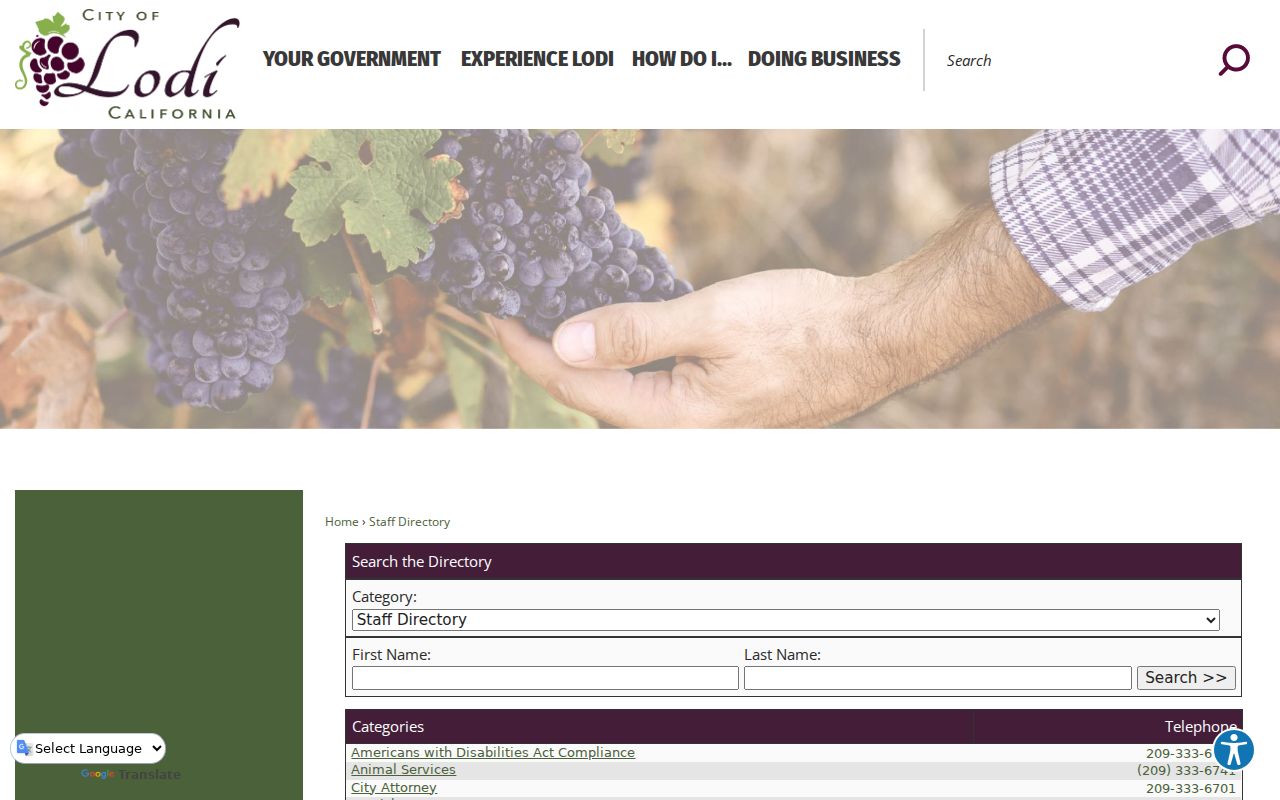
That structure helps a searcher move from a broad agency name to the unit most likely to hold a public contact or record.
| Directory control | Format | Required | How it works |
|---|---|---|---|
| Search terms | Text | No | Displays matching staff-directory entries |
| Department links | Link list | No | Opens the selected city department or unit |
| Entry page | Dynamic directory ID | No | Some listing functions require JavaScript |
A sample entry can show a department or unit, its public phone, nested subunits, an office link, and extension notes. Verified examples include the City Clerk, Finance, Library Reference Desk, Police Records, Code Enforcement, and Public Works/Engineering. If a person is absent, call the department's main line. City Clerk records requests are a later fallback, except police and fire reports go to those departments.
Lodi Unified Directory Details
The Lodi Unified department directory is the deepest current education directory found for Lodi. It uses A-to-Z department blocks rather than one resident-style search box. Each block may include a location, office hours, phone, email, related links, named contacts, and titles. Accounting, Communications, Facilities and Planning, and the Superintendent's Office all have identified contacts in the inspected page.
The district directory page shows the repeated blocks and contact layout used across its offices.
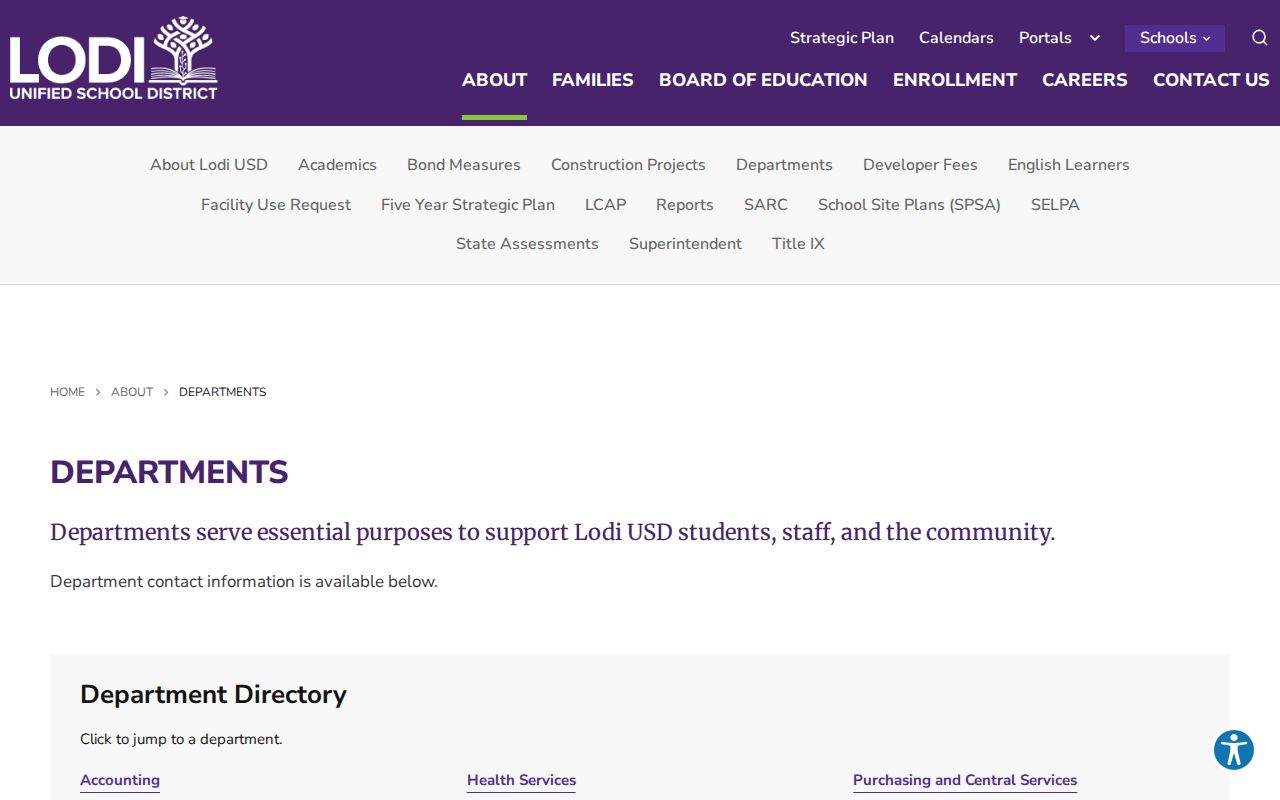
This is a directory for public-school operations. It does not provide a general student or alumni search.
- Navigation
- Letter anchors lead to the available department initials.
- Office facts
- Entries may show department, location, hours, phone, and email.
- People fields
- Named contacts appear with their titles.
- Extra context
- Blocks can include related links and district contact information.
- Access
- The web directory is free and requires no login.
Lodi Public Record Directories
Some public records behave like name directories, though each name is tied to a legal event. The San Joaquin Recorder's Grantor/Grantee Index lists parties in deeds, liens, mortgages, affidavits, and other recorded documents. “Grantor” means the party transferring an interest; “grantee” is the party receiving it. The web index begins January 1, 1968, while official county documents reach 1851.
Insider tip: A failed web name search does not prove that an older Lodi deed is absent. Pre-1968 documents remain available digitally and on film at the Recorder's Stockton office. The portal also advises trying all possible spelling variants, a useful step for surnames, initials, ranch names, and firms that changed punctuation.
California's voter file is not an ordinary public people directory. Personal status lookup is for the voter, while file access requires an approved purpose and application.
City documents offer a separate directory layer. Council records, board files, contracts, permits, and statements can name people associated with local action. Search the city records portal first. Detailed access rules belong with Lodi public records, since a directory hit and a certified or complete record are not the same thing.
Lodi Property Directory Trails
Property systems connect people to parcels through several county tools. The Assessor inquiry searches by fee parcel, assessment number, street address, boat, CF number, aircraft, or tail number. No verified owner-name web search was found. The Tax Collector adds roll-year choices from 2019 through 2026 and searches by fee parcel, assessment, or street address. San Joaquin GIS supplies assessment maps, district tools, survey land records, school district lookup, and flood-zone views.
A fee parcel is the county's property-search key. The situs address is the land's physical location. A mailing address is where tax notices go, and it may point outside Lodi. The tax-bill help material identifies the lien-date owner and keeps physical and mailing addresses distinct, which can make the mailing field the more useful directory clue.
For past owners, move from the parcel or tax key to the Recorder name index. Then use the museum's assessment books, plat books, reverse directories, and city directories for gaps between transfers. This record chain identifies ownership and occupancy evidence, not every person who lived at an address.
Note: Lodi permits and city code files stay with city systems, while deeds, assessments, taxes, and parcel maps are county records.
Lodi Business Directory Sources
Business and professional directories are especially useful in a city shaped by wine, agriculture, food processing, utilities, schools, and downtown commerce. The Lodi Chamber member directory supports category and alphabetical browsing. Its categories include wineries, winegrape growers, agricultural services, manufacturing, medical services, nonprofits, and downtown businesses.
The Chamber directory view shows how member firms and public contact details are grouped.
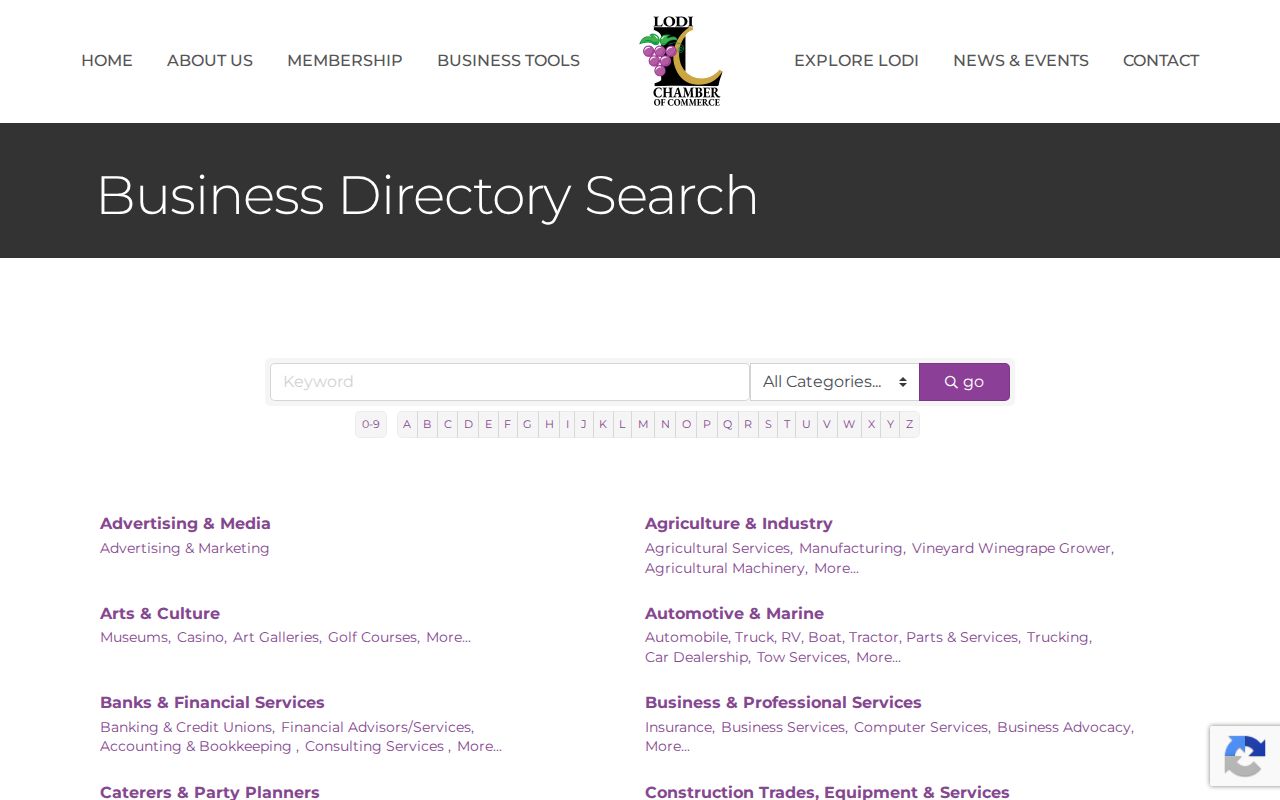
A Chamber result shows membership, not a government license. Confirm the legal entity through California bizfile, a fictitious business name filing through the County Clerk, or the relevant license board.
The California Department of Consumer Affairs Advanced License Search accepts first name, last name, license number, business name, registry number, board or bureau, and license type. California bizfile searches entities by name or number and may show status, type, filing data, agent information, addresses, and public filings. Together, those official directories can separate a trade name from a registrant or licensed person.
No Current Lodi White Pages
No verified official current residential white-pages directory was located for Lodi. That research gap matters. A commercial name list should not be mistaken for a complete, current public directory, and low-detail search results may blend people with the same name.
Historical phone books and reverse directories remain valid archive sources. A reverse directory arranges entries by address or telephone number rather than surname. Ask the Lodi Public Library Reference Desk, the San Joaquin County Historical Museum, or the California State Library about a needed year. The museum verifies city and county directories across 1852-1980, but exact Lodi Public Library phone-book and reverse-directory years were not documented.
Myth: The disappearance of a current public white-pages source does not end a Lodi search. Staff, school, property, license, business, newspaper, yearbook, and historical directories each cover a defined relationship. Their limits make source matching more important, not less.
Historical Lodi Directory Collections
The San Joaquin County Historical Museum archives at Micke Grove form the strongest local directory collection. Holdings include city and county directories from 1852-1980, county archives from 1850-1990, the Great Registry of Voters, Lodi and Tokay yearbooks, assessment and plat books, vital statistics, marriage records, maps, aerial photos, and Sanborn Fire maps.
The museum archive page displays the breadth of those Lodi-area sources.
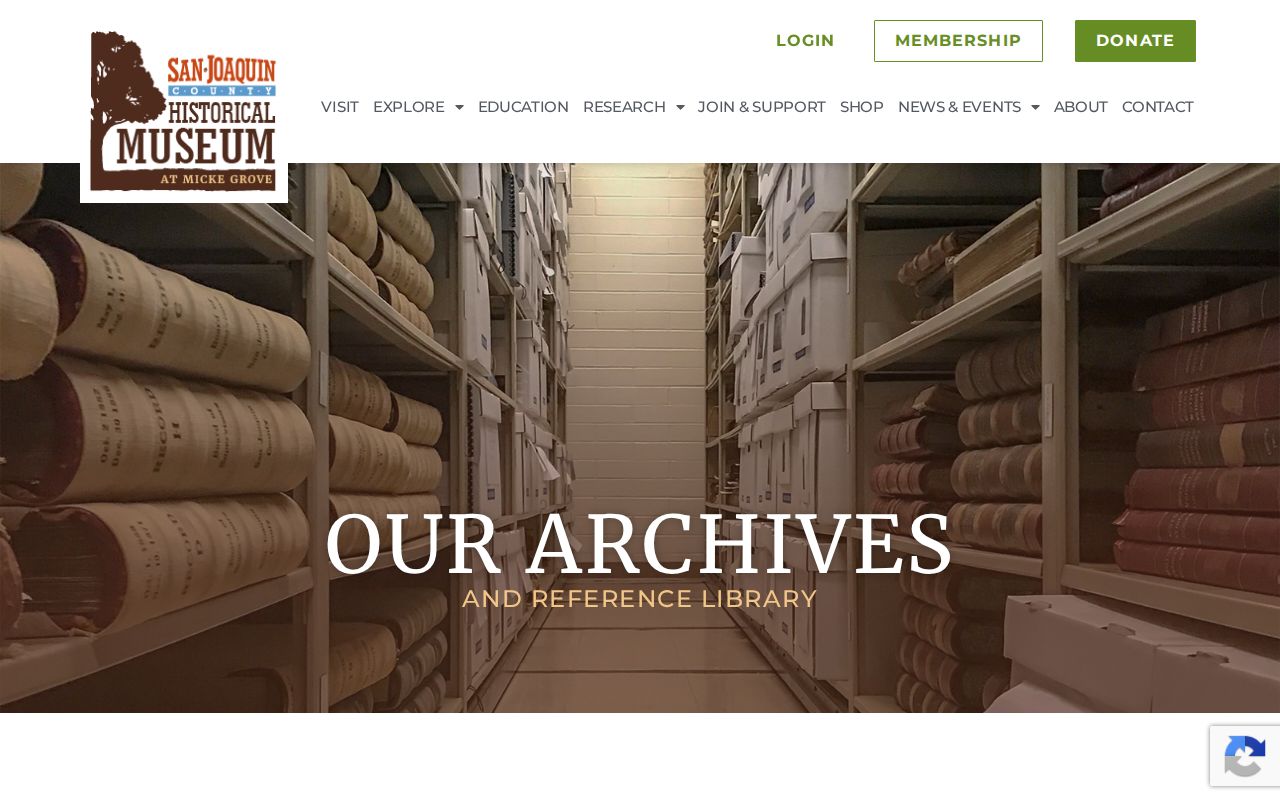
The museum's Gerald D. Kennedy Reference Library is non-circulating, so plan for research-room use rather than borrowing the books.
The California State Library directory collection is another fallback. Most of its city directories are not online.
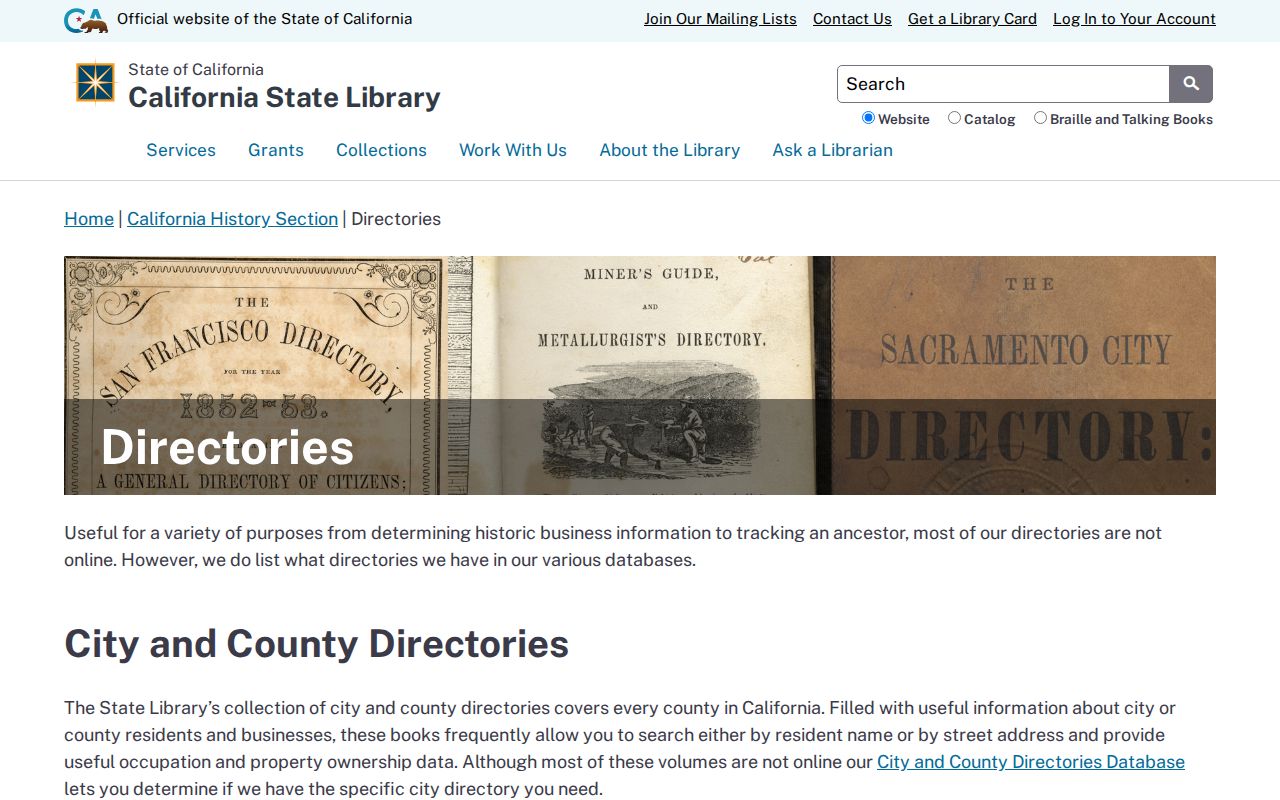
The state collection can fill a year or publisher gap after checking the museum's local run.
For broader family research, the Stockton-San Joaquin County Public Library genealogy collection adds more than 1,500 genealogy books, 200 family histories, 125 periodicals, and county cemetery and vital-record references.
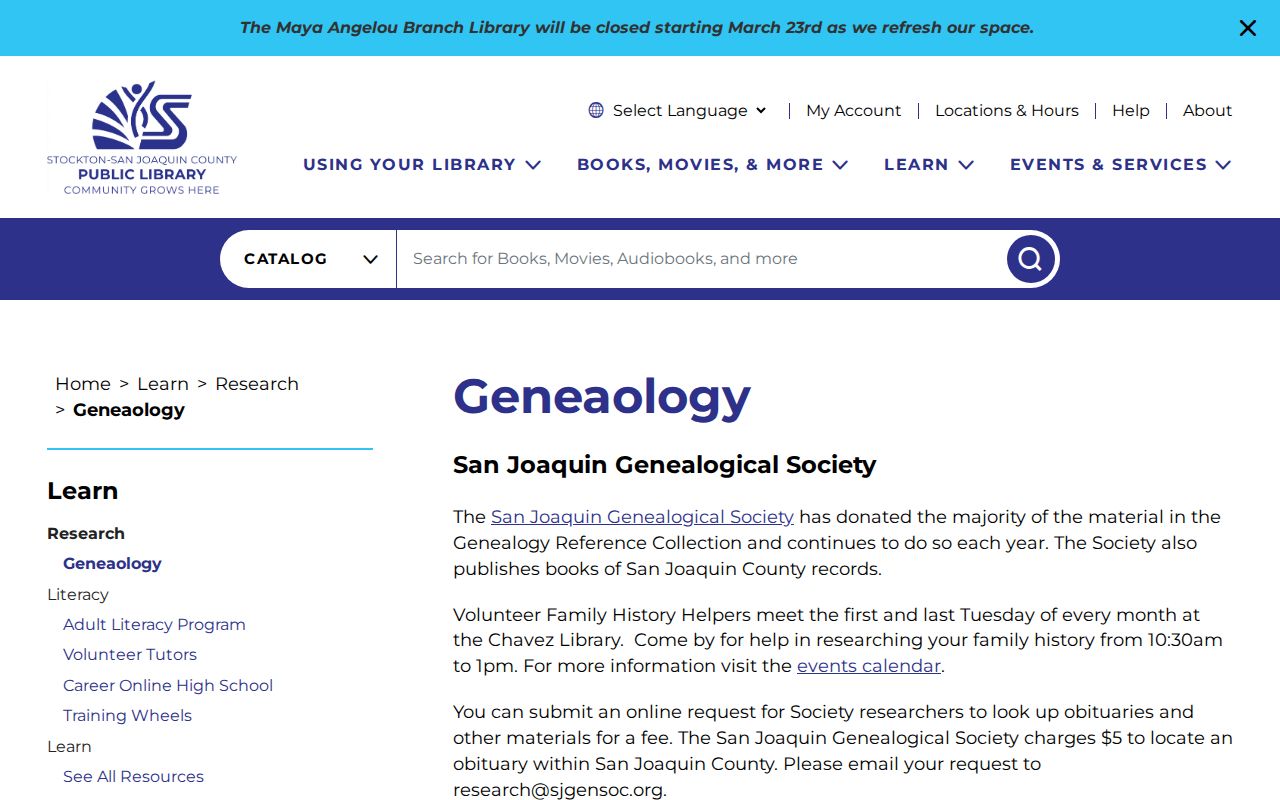
Those countywide holdings complement, rather than replace, the museum's Lodi-specific books and municipal records.
Lodi Yearbook Name Directories
Yearbooks can supply a full name, school, class period, activity, team, faculty role, or peer group. The Historical Museum confirms books from Lodi, Tokay, and other San Joaquin County high schools, though exact years were not itemized. Search by school and approximate year before asking staff to inspect a volume.
Obituaries and newspapers extend that evidence into adult life. The Lodi News-Sentinel may connect a person to relatives, clubs, civic events, a business, or an address. County cemetery records and local genealogical works add death and burial links. These sources are strongest when two independent entries agree on names and dates.
Historical voter registers are also different from today's restricted voter file. The museum's Great Registry can place a voter in an earlier county context, while modern voter details remain subject to California access limits.
Lodi Directory History Timeline
Directory evidence changes with the government and the format that created it. San Joaquin County's trail predates Lodi's city government, while the online index covers only the modern part of a much older record run.
| Year or span | Directory milestone |
|---|---|
| 1851 | County recorded documents and maps begin |
| 1852-1980 | Museum's verified city and county directory span |
| 1906 | Lodi incorporates and begins a distinct municipal record trail |
| 1907-1962 | Lodi City Records cover assessor, clerk, police, public works, treasurer, maps, and transfers |
| 1968-present | Recorder Grantor/Grantee web index coverage |
The archived Lodi City Records fill 28 linear feet and were transferred to the Historical Society in 2010. Their roads, sewer contracts, maps, property transfers, and early department files can explain a person or address that modern parcel data alone cannot. Use the year as the key: live web directories for current offices, record indexes for legal events, and archive books for earlier residents.