
Which Lodi Records Are Open
Lodi public records do not sit in one city database. The City Clerk holds council, board, permit, code, and other municipal files. San Joaquin County offices keep the main deed, assessment, tax, vital, court, and jail systems. State agencies add business, license, prison, and registry lookups. An online index may be open even when the image or certified copy requires a separate request.
| Lodi record set | Official keeper | Web access | Practical access |
|---|---|---|---|
| Deeds, liens, maps | San Joaquin Recorder | Grantor/Grantee Index, 1968-present | Index online; earlier documents and copies at office |
| City files | Lodi City Clerk | City records portal | Search, online form, phone, email, or office viewing |
| Court cases | San Joaquin Superior Court | FullCourt Enterprise | Portal, onsite viewing, or records request |
| Property and tax | County Assessor and Tax Collector | Assessment, tax, and GIS tools | Free inquiry; office help and paid data products |
| Birth, death, marriage | Recorder-County Clerk or CDPH | Copy applications, not free certificate images | Eligibility-based certified or informational copy |
| Custody and reports | County Sheriff | Who Is In Custody | Web/phone status; reports in office or by mail |
Some categories remain closed or limited. Juvenile, adoption, sealed, and expunged court matters are not ordinary search targets. Confidential marriages, protected voter data, Safe at Home addresses, sensitive identifiers, and DMV personal data follow their own laws. A result screen is never proof that every part of the file is public.
How Lodi Records Split
Geography decides the custodian. Lodi handles records made by its own departments, including council actions, city permits, local code matters, FPPC statements, police files, and fire files. County government handles deeds, property assessment, taxes, local vital events, court cases, elections, and bookings. California agencies keep statewide license, business, prison, privacy, and vital-record channels.
The City Clerk coordinates general California Public Records Act requests, but the city expressly routes police reports to Lodi Police and fire reports to Lodi Fire. That exception prevents a common wrong-office request. City files can be searched at records.lodi.gov, requested through the online form, requested by calling (209) 333-6702, sent by email, or viewed in the office by prior arrangement. Mailed copies cost $0.10 per page plus postage, while media and postage are billed at cost.
For county functions, the San Joaquin Assessor-Recorder-County Clerk information hub shows the combined office behind several Lodi record channels.
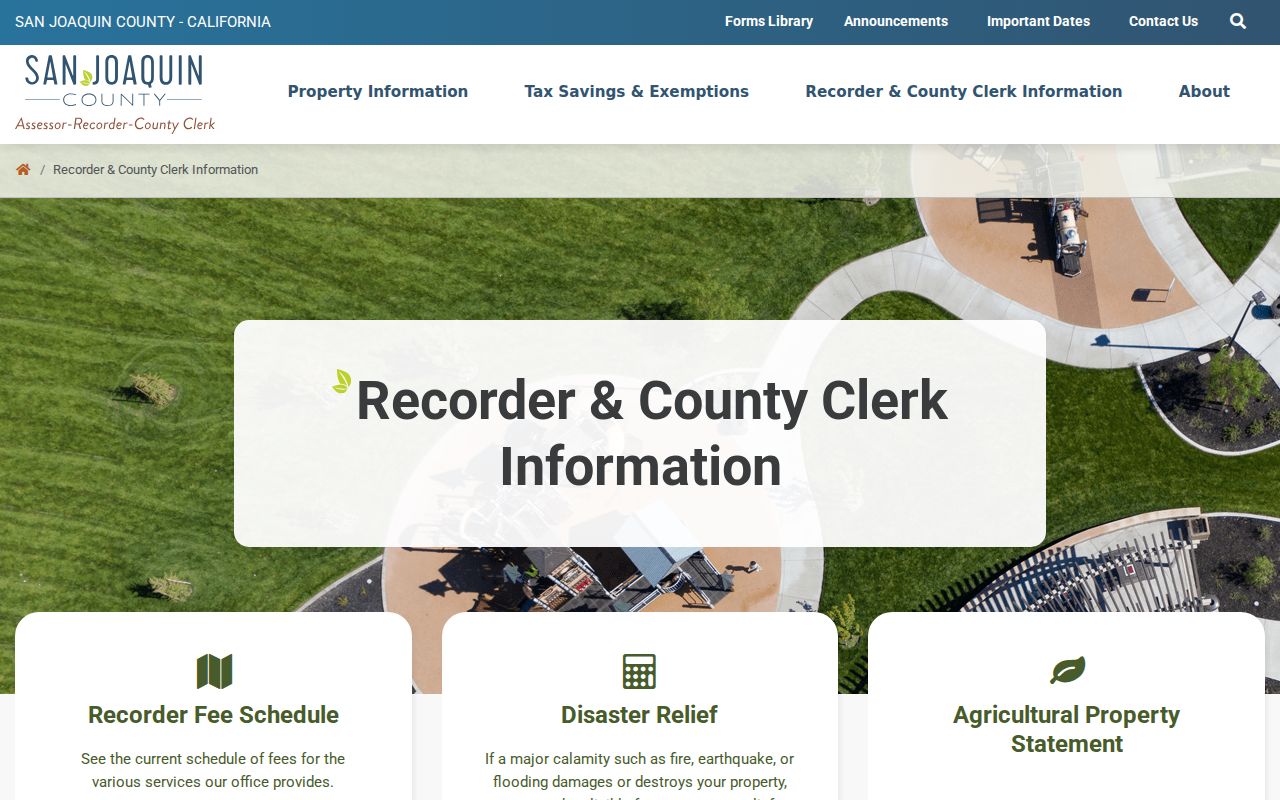
The combined department name can hide an important split: Recorder-County Clerk service is in Suite 260, while Assessor service is in Suite 230.
Lodi Recorder Records Beyond 1968
The Recorder holds deeds, mortgages, liens, affidavits, maps, and other official documents dating to 1851. Yet the Tyler Grantor/Grantee web index begins January 1, 1968. Grantor means the party giving or transferring an interest; grantee means the party receiving it. The portal disclaimer compares its index to a library card catalog and advises trying all possible spelling variations.
That date is a web boundary, not a loss of older Lodi records. Pre-1968 official documents remain available digitally and on film at the Recorder's Stockton office. Public document searching is available at the office from 8:00 a.m. to 4:30 p.m. Copies and certification can be ordered after the correct document is identified. Family names with punctuation, initials, alternate spellings, spouse names, or business forms deserve separate searches.
Insider tip. A blank online name search does not rule out an older deed. Move from Tyler to the office's digital and film collection for pre-1968 documents.
Note: Lodi incorporated in 1906, but its county recorded-document trail reaches back to 1851 because San Joaquin County predates the city.
Copy Fees for Lodi Records
An index entry points to a record; it is not the record image. A certified copy carries the custodian's formal certification. The San Joaquin Recorder charges $1 per page for self-assisted copies, $3 per page for staff-assisted copies, and $2 to certify a document. Recorded map photocopies cost $5, with $2 map certification. These charges differ from Lodi's city-file rate.
Fictitious business name filings can connect a trade name to its filer when the business name does not include the owner's surname. The county Fictitious Business Name page explains that filing channel.
The filing source belongs with the County Clerk rather than the City Clerk, even when the business operates inside Lodi.
- Index
- A finding aid that identifies a filing; it may not display the full document.
- Certified copy
- A copy formally authenticated by the office that holds the record.
- Custodian
- The government office responsible for keeping and responding for a record.
- Exemption
- A legal basis for withholding all or part of an otherwise requested file.
Lodi Court Record Limits
All Lodi trial-court matters route through the Superior Court of California, County of San Joaquin. There is no separate Lodi municipal court database. FullCourt Enterprise provides public case and calendar access. A party search uses combinations of first, middle, and last names; California Rule of Court 2.507 prevents adding a date of birth or driver's license data to that name search. Case-number search is a separate mode.
| Portal field or channel | Format | Limit or fallback |
|---|---|---|
| Party name | First, middle, last | Run separately; no DOB or driver data |
| Case number | Case identifier, such as CR-2020-9091 | Use when already known |
| Court calendar | Public portal function | Calendar data is not the official file |
| Older criminal Register of Actions | Before October 19, 2015 | View onsite or submit a records request |
A Register of Actions is the chronological list of events and filings in a case. Online data can establish that a public case exists, but official copies come from the court. Juvenile, sealed, adoption, victim, and some family-law information may be withheld or unavailable remotely.
Lodi Vital Record Access
Birth, death, and marriage records for San Joaquin County events date from 1851 to the present at the Recorder-County Clerk. They do not become free certificate images merely because the office is public. The county offers separate online applications, office-counter service, and the California Department of Public Health statewide route.
The county vital records page connects Lodi requesters to the birth, death, and marriage applications.
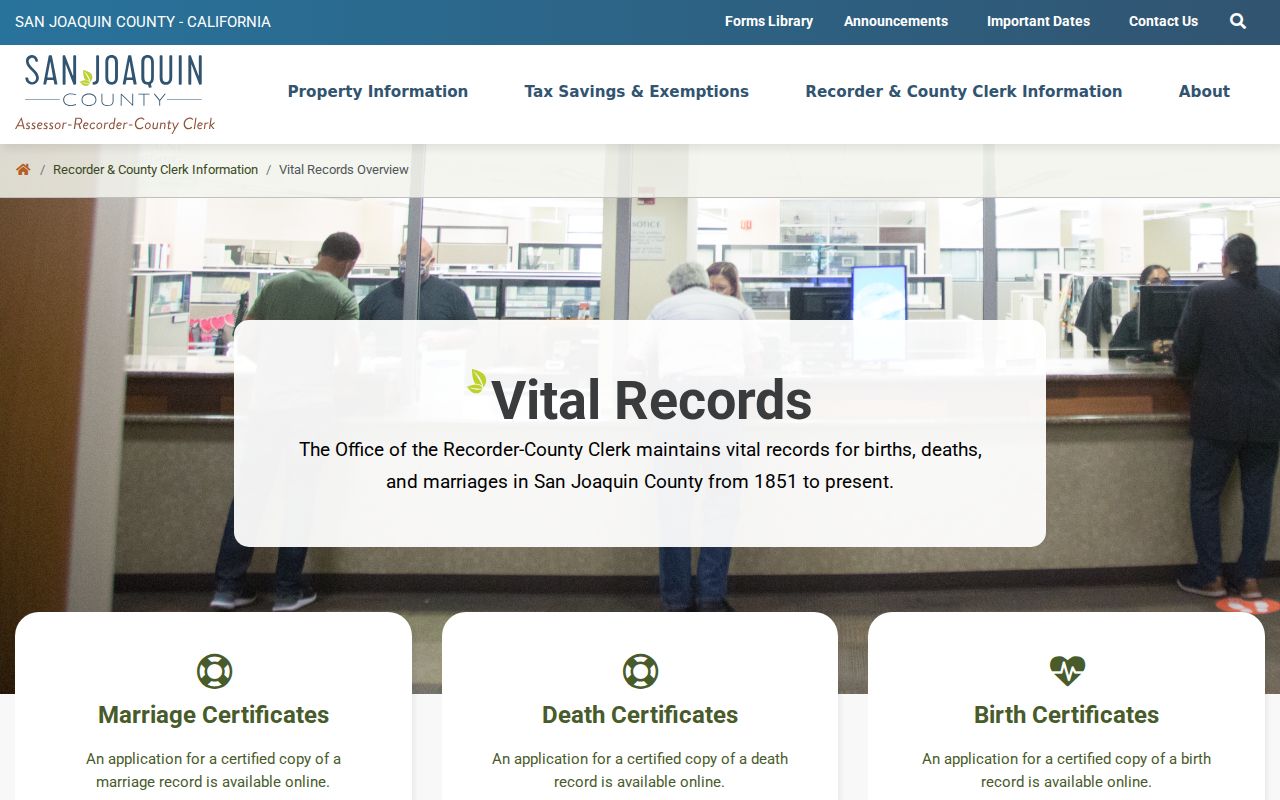
The county counter is in Suite 260 at 44 N. San Joaquin Street in Stockton, with vital statistics copy service from 8:00 a.m. to 4:15 p.m.
Under Health and Safety Code section 103526, an authorized certified copy requires an eligible relationship or role plus the required sworn statement and identity process.
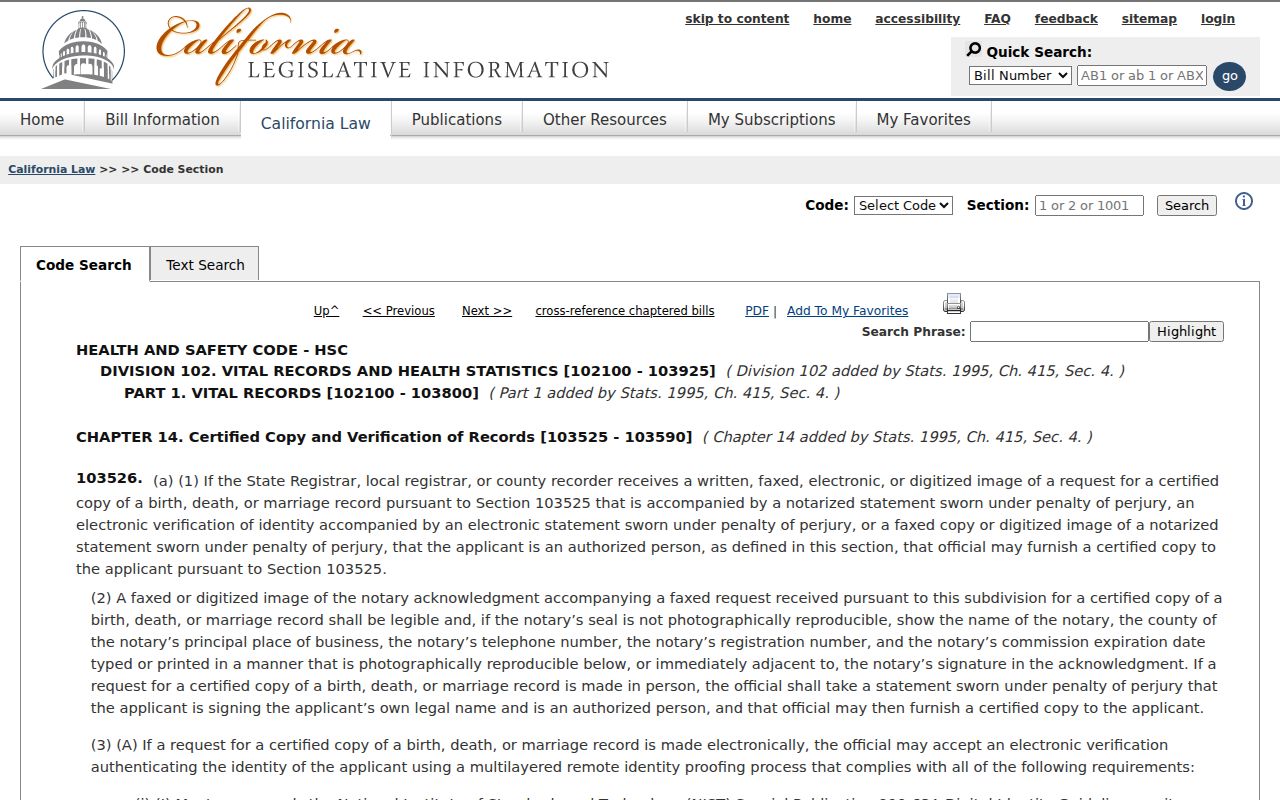
Other requesters may qualify for an informational certified copy of a birth, death, or nonconfidential marriage record. A confidential marriage copy is restricted to a party to that marriage unless another legal authorization applies.
The CDC California ordering reference lists the state routes and fees used when ordering through the statewide system.
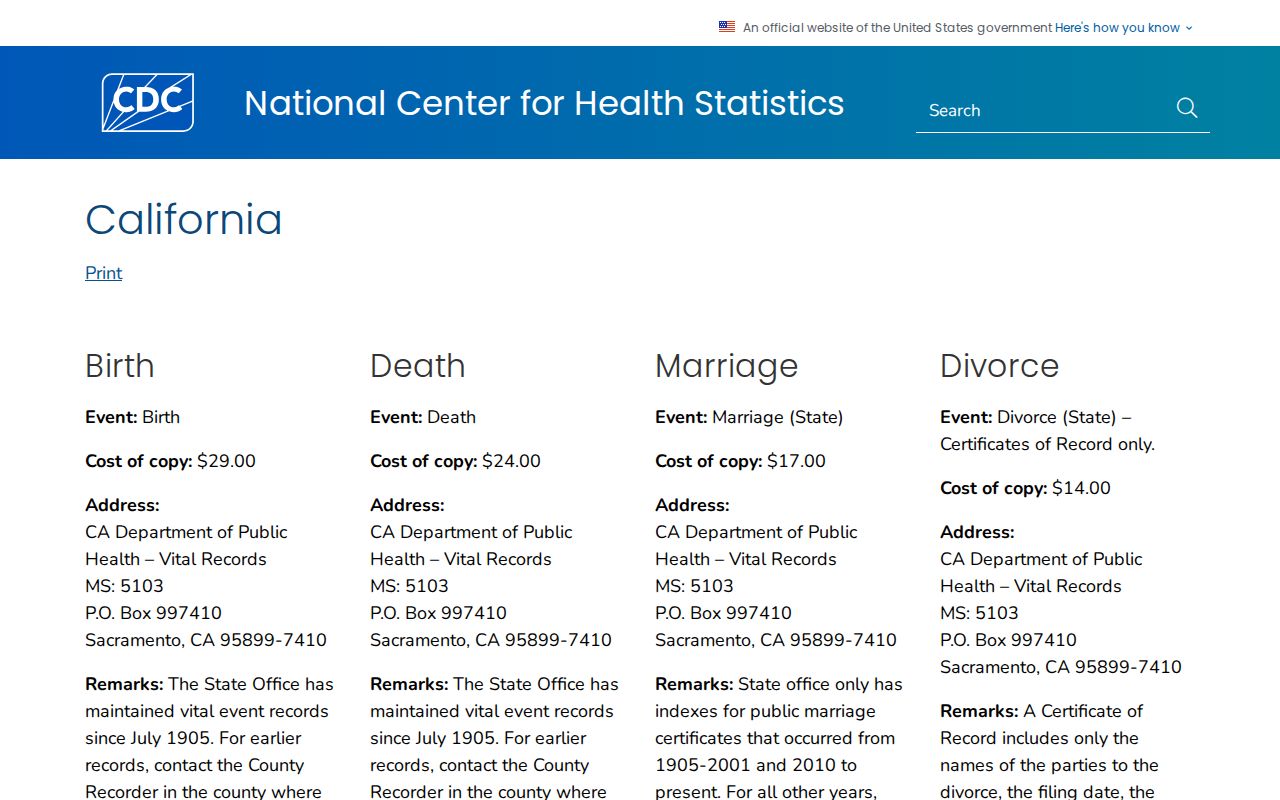
The state reference lists $29 for birth, $24 for death, and $17 for marriage copies; the county application controls the current local total.
Lodi Property Record Search Fields
The Assessor, Treasurer-Tax Collector, and GIS systems answer different questions. The Assessor inquiry accepts a street address or county identifier. The tax portal shows roll years 2019 through 2026 and uses property-tax keys. GIS provides assessment maps, district lookups, survey land records, school district tools, and flood-zone viewers. An assessor's value is not a deed transfer, and a parcel map is not proof of title.
| Search field | System | Verified format note |
|---|---|---|
| Fee Parcel | Assessor and tax inquiry | Assessor accepts 2 to 20 characters |
| Assessment | Assessor and tax inquiry | Searches a specific assessment |
| Street Address | Assessor and tax inquiry | Uses the parcel's physical location |
| Boat, CF#, Aircraft, Tail# | Assessor inquiry | Personal-property search modes |
| Roll Year | Tax inquiry | Current and historical choices shown |
The tax bill distinguishes the situs, or physical parcel address, from the mailing address used for notices. That difference may explain why an owner's mail goes outside Lodi. Online assessment and tax tools are free; the Assessor also offers office help, parcel maps, and paid data products.
Lodi Custody and Registry Records
San Joaquin County Sheriff's Who Is In Custody tool searches by name or booking number and can list inmates by last name. Its name fields include last, first, and middle name, with All Inmates and gender options. The booking log defaults to recent activity and may show inmate name, gender, date of birth, booking number, booking time, and custody status. Phone access at (209) 468-4562 is the fallback for current booking information.
Incident reports are a different channel. The Sheriff's Records Division accepts office or mail requests at (209) 468-4408; the researched average report fee is $47, with added charges possible based on size. A Lodi Police incident stays with the city police records function even if a later county booking appears in the Sheriff's custody system.
State prison custody uses the California Department of Corrections and Rehabilitation locator. Federal custody uses the Bureau of Prisons locator. California's Megan's Law registry has separate search and use restrictions.
Private Records and Redactions in Lodi
Government custody does not make every field open. This is the key myth to discard. Vital certificates follow copy-eligibility rules. Voter files require an approved application and lawful qualifying purpose, while My Voter Status is for checking one's own registration. Court policy limits remote display. Law-enforcement investigatory and victim details may fall under exemptions.
California Safe at Home gives eligible participants a substitute mailing address accepted by city, county, and state agencies. Confidential voter statuses are excluded from released voter files. Driver's license numbers, state ID numbers, the last four digits of a Social Security number, unique identifiers, signatures, and preregistration records for minors are also excluded from voter-file disclosure.
Redaction means obscuring protected information while releasing the rest. If an agency withholds a record, its response should identify the legal basis. A requester can narrow the date range, department, subject, or record type to separate disclosable material from protected content.
Lawful use. Open Lodi records support family history, estate research, civic review, and personal safety. Never use a record to stalk, harass, threaten, or harm another person.
Lodi Public Records Offices
Use the office that created or legally keeps the file. Three counters handle many Lodi needs, but their functions and hours differ. Recorder-County Clerk and Assessor offices share one Stockton building in separate suites. The City Clerk remains in Lodi for municipal files.
San Joaquin Recorder-County Clerk
44 N. San Joaquin Street, Suite 260, Stockton, CA 95202
(209) 468-3939
San Joaquin County Assessor
44 N. San Joaquin Street, Suite 230, Stockton, CA 95202
(209) 468-2630
Recorder document searching and copy service runs to 4:30 p.m. on weekdays except holidays. Assessor hours are 8:30 a.m. to 4:30 p.m. The City Clerk offers search, request, phone, email, mail, and arranged office-viewing channels.
Requesting Lodi Public Records
The California Public Records Act covers disclosable city and county agency records, but it does not replace the special application systems for vital certificates, court files, or voter data. Government Code section 7922.535 requires an agency to determine within 10 days whether a request seeks disclosable records it possesses. Written notice may extend that determination by up to 14 more days for unusual circumstances. The agency should give an estimated availability date when it finds disclosable records.
- Name the custodian. Decide whether the file belongs to Lodi, San Joaquin County, the Superior Court, or a California agency.
- Check the official index. Search the city portal, Recorder index, court portal, or subject-specific database before asking staff to repeat an available search.
- Describe existing records. Give a date range, department, record type, subject, case or document number, and preferred electronic format when known.
- Use the accepted channel. Submit through the portal, form, email, mail, phone, or counter method that the custodian documents.
- Review the determination. If material is withheld, read the cited exemption and narrow the request when that can separate open records from protected data.
The California Public Records Act text is the starting point for the statewide access framework.
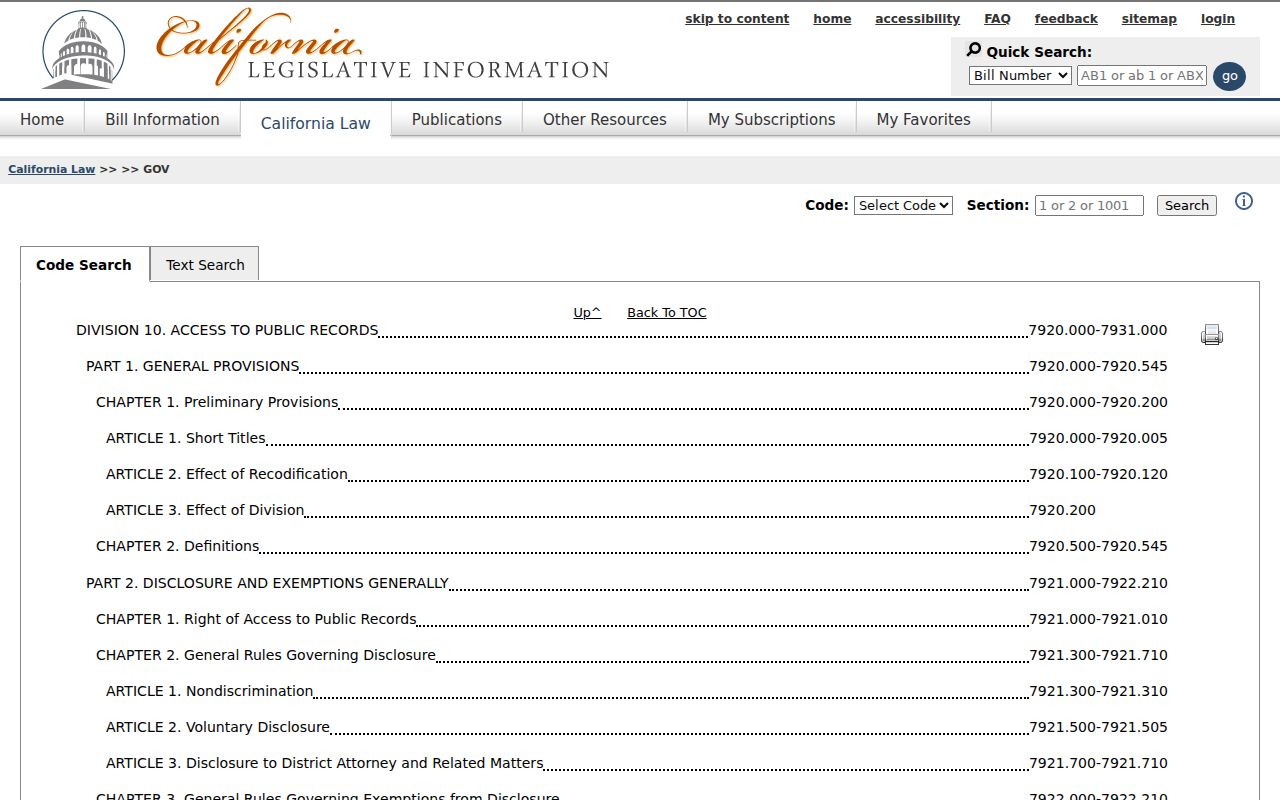
The codified division sets the broader disclosure rules that Lodi and San Joaquin County agencies apply.
The specific CPRA determination deadline explains the initial period and written extension.
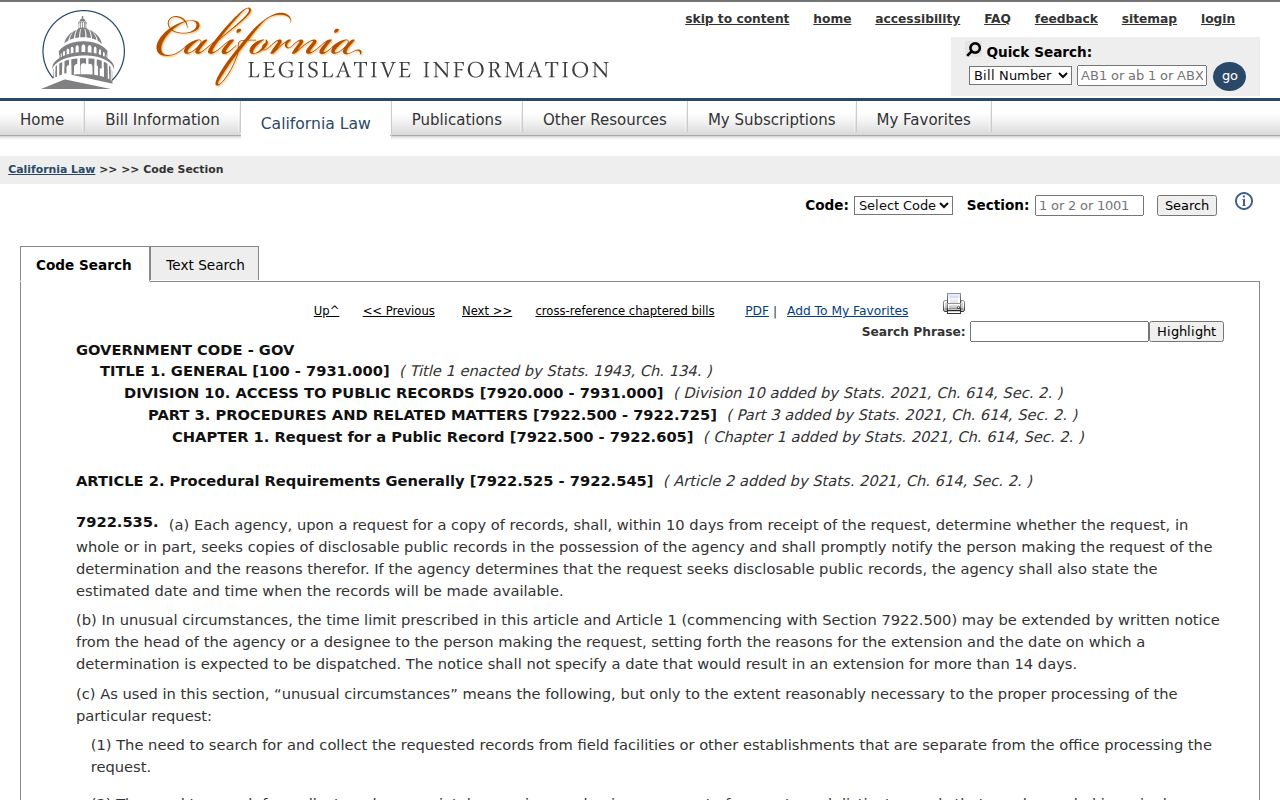
The deadline concerns the agency's determination, not a promise that every responsive file will be produced within ten days.
When Lodi Online Records Stop
Portal limits are part of the local records system. The Recorder web index stops at 1968, but the office holds earlier digital and film records. The court sends older criminal Registers of Actions and non-displayable files to onsite or request access. Vital records require the correct copy application. Sheriff reports use the Records Division rather than the custody search. City police and fire reports bypass the general City Clerk queue.
Historical gaps have an archive route. The San Joaquin County Historical Museum keeps county archives, Lodi municipal records, maps, voter registers, directories, yearbooks, and other research material. The Online Archive of California finding aid covers Lodi City Records from 1907 through 1962. Those records can preserve clerk, assessor, police, public works, treasurer, map, and property-transfer evidence from early city government.
No verified courthouse fire or broad record loss explains these cutoffs. The pattern is continuity across formats: county records from 1851, Lodi government records after incorporation, a Recorder web index from 1968, and a court remote-access boundary in 2015. When the screen stops, move to the counter, request form, film, or archive instead of assuming the record does not exist.